Renshan Town
惠州惠東稔山鎮
About the village
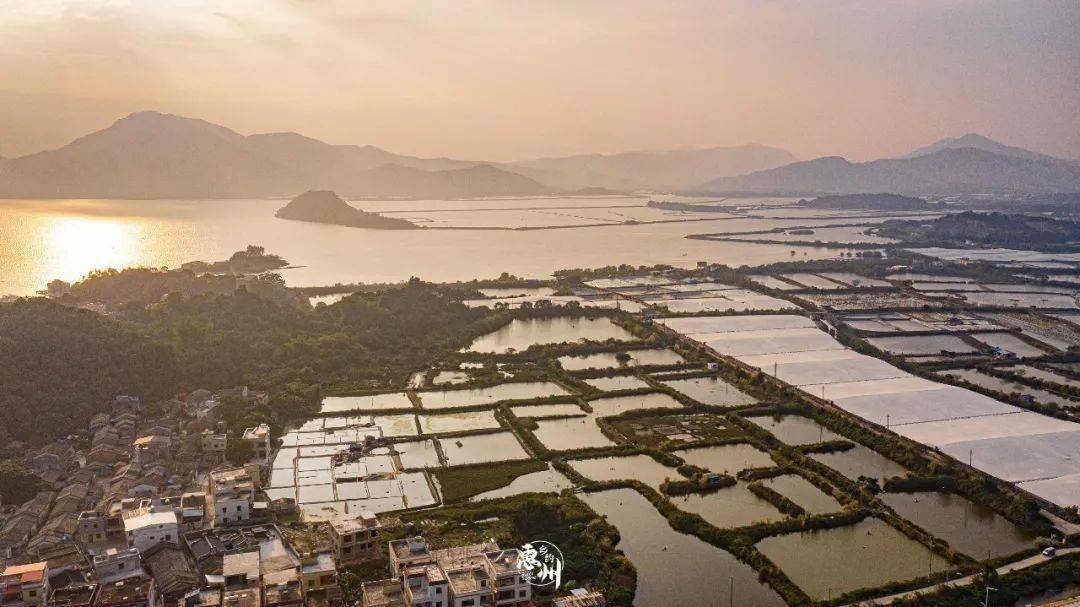
Renshan Town (稔山鎮) is a coastal township at the northern end of the Renping Peninsula (稔平半島), in Huidong County, Huizhou, Guangdong. It covers about 180 square kilometres and 36 kilometres of shoreline, and takes in seventeen villages and two communities. Its population was about 87,000 in 2018. Renshan sits in the county's central belt, where Hakka is the main speech, with Hoklo and Zhanmi alongside. The name is late. Renshan appears in records only in the early Kangxi period; the area's documented centre in Ming times was Fanluogang (飯羅岡), now Fanhe village (范和村), where an inspection office was set up in 1368 under Guishan County. Hence the local saying that Fanhe came first. Two garrison farming settlements, Dabu Tun and Chentian Tun (大埔屯, 陳田屯), were planted here in the early Ming; part of the Chentian wall and its moat survive. The town grew around salt and fish. Its market took shape about 1662, after the coastal evacuation was lifted and the fishing and salt trade revived, serving Tieyong, Jilong and Huangbu. Salt led the trade, giving the market its name, the fish and salt market (魚鹽市). The Chen family of Changpai recorded the sea dikes and salt pans they built; salt pans later spread across nineteen of the town's hamlets. Fanhe village, which carries the designation Chinese ancient village (中國古村落), holds the Luogang Wei (羅岡圍) enclosure and the Chen Yuan ancestral hall (陳元公祠). The lid lion dance (蓋子獅) of Changpai is provincial heritage, a survival of the Ming garrisons. The county has been named a provincial and a national home of Chinese chess, and Renshan produced the chess masters Lü Qin and Chen Xinglin. Rice, salt and fish ponds still carry the economy, and Huidong South station on the Xiamen to Shenzhen railway stands in the town.
Photos
No photos yet — members can add the first one.